
NetMirror APK Buffering Problems: Causes and Ways to Improve Video Playback
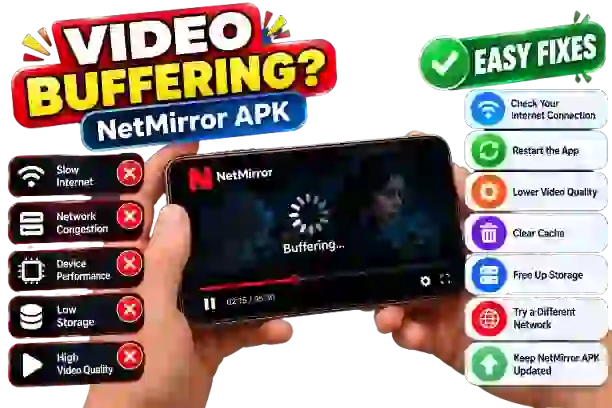
Video buffering can be frustrating, especially when a video keeps stopping every few seconds. If you are using NetMirror APK and videos take a long time to load, pause during playback, or repeatedly show a loading screen, several factors may be responsible. Buffering does not always mean that the APK itself is broken. Your internet connection, network congestion, device performance, video quality, available storage, or temporary service problems can all affect playback. The good news is that most buffering problems can be checked step by step. This guide explains the common causes of NetMirror APK buffering and practical ways to improve video playback on Android devices.
Why Does NetMirror APK Keep Buffering?
Buffering happens when the video cannot receive enough data to continue playing smoothly. Your device needs to receive video data continuously. If the data arrives slower than the video is being played, playback may pause while more content loads.
Common causes include:
- Slow internet connection
- Unstable Wi-Fi
- Weak mobile data signal
- Network congestion
- High video quality
- Limited device resources
- Outdated application version
- Temporary service problems
- Corrupted app cache
- Background apps using bandwidth
1. Check Your Internet Connection
Your internet connection is one of the first things to check when NetMirror videos buffer. Open another website or online service on your phone and see how quickly it responds. If other services are also slow, the issue may be related to your network. You can try switching from Wi-Fi to mobile data or from mobile data to Wi-Fi. If playback improves after switching networks, your original connection may be responsible for the buffering. If you use Wi-Fi, moving closer to the router may also improve signal strength.
2. Avoid Heavy Network Usage
Other devices and applications can consume a large amount of bandwidth while you are watching a video. For example, another device on the same Wi-Fi network may be downloading large files, backing up photos, installing updates, or streaming high-resolution videos. Pause unnecessary downloads and close services that are using significant bandwidth. If possible, test NetMirror when fewer devices are connected to the same network. This can help you determine whether network congestion is contributing to the problem.
3. Lower the Video Quality
Higher video quality requires more data. If your internet connection cannot maintain the required speed, high-quality playback may result in frequent buffering. If NetMirror provides video-quality options, try selecting a lower quality and test playback again. For example, if a video buffers repeatedly at a higher quality, reducing the quality can lower the amount of data required for continuous playback. The goal is to find a quality level that provides stable playback on your current connection.
4. Restart Your Internet Connection
Temporary network problems can sometimes cause video buffering. If you are using Wi-Fi, restart your router and wait for the connection to become available again. You can also disconnect your phone from Wi-Fi and reconnect it. For mobile data, turning airplane mode on for a few seconds and then turning it off can refresh the phone’s network connection. After reconnecting, open NetMirror and test the same video again.
5. Clear NetMirror APK Cache
Temporary files stored by an application can occasionally become outdated or corrupted. Clearing the cache can be useful when NetMirror starts buffering unexpectedly or behaves differently from before. On many Android devices, you can find this option through:
Settings → Apps → NetMirror → Storage → Clear Cache
The exact menu may vary depending on your Android phone. After clearing the cache, open NetMirror again and check playback. Avoid using Clear Data unless necessary because it may reset application settings or remove locally stored information.
6. Close Unnecessary Background Apps
Your phone may be running several applications in the background while you are watching a video. Some applications can use both system resources and internet bandwidth. Cloud backups, downloads, updates, and other streaming applications can affect performance. Before starting playback, close applications that you do not need. This is especially useful on devices with limited RAM or older hardware.
7. Check Your Phone’s Storage
Very low storage can affect overall Android performance. If your device is almost full, applications may become slower and some functions may not work normally. Open your phone’s storage settings and check how much free space remains. Remove files you no longer need, such as old downloads, duplicate videos, unused applications, or large temporary files. After freeing storage, restart the phone and test NetMirror again.
8. Keep NetMirror APK Updated
An outdated APK can sometimes cause compatibility or playback problems. If a newer version is available from a source you trust, check its version information and compatibility before updating. An update may contain bug fixes or changes that improve compatibility with newer Android versions. However, do not install an APK simply because a website claims it is the newest version. Use a reliable source and verify that the package belongs to the intended application.
9. Check Your Android Version
Your Android version can affect application compatibility. If NetMirror was working correctly before an Android system update, or if the app started having problems after an Android update, compatibility may be worth checking. Look at your phone’s Android version in the system settings. If your device is using an older Android release, some newer application builds may not behave exactly as expected. At the same time, avoid installing unofficial system modifications just to solve an application problem.
10. Test Different Videos
An important troubleshooting step is to check whether every video buffers or only one specific video. Start another video and observe its playback. If several different videos buffer in the same way, your connection, device, application, or service may be involved. If only one video has a problem while other videos play normally, the issue may be related to that particular content or source. This simple test can help you avoid changing your phone settings unnecessarily.
11. Restart Your Android Device
A phone restart can resolve temporary software and network issues. Restarting the device closes background processes and reloads system services. It can also refresh certain network connections. After restarting, avoid opening several applications at once. Launch NetMirror and test video playback first. If buffering disappears after the restart but returns later, another background process or temporary system issue may be involved.
12. Avoid Using a Weak Network Signal
A weak Wi-Fi or mobile signal can make streaming less stable. If you are using Wi-Fi, try moving closer to the router. Walls, floors, and physical distance can reduce wireless signal strength. If you are using mobile data, move to an area with better network coverage if possible. A stronger and more stable connection generally provides better conditions for continuous video playback.
13. Consider Temporary Service Problems
Sometimes buffering is not caused by your phone or internet connection. Online services can experience temporary slowdowns or technical problems. If NetMirror suddenly starts buffering while other applications work normally, the issue may be temporary. You can test the application again later instead of repeatedly changing device settings. If the problem affects only NetMirror and continues for an extended period, checking for application updates or known service issues may provide more information.
What Should You Do If Nothing Works?
If you have tested your connection, lowered video quality, cleared the cache, restarted your device, and checked the application version but buffering continues, consider testing NetMirror on another network. This can help identify whether the issue is related to your current internet connection. If the same problem occurs on different networks and different videos, the application or service may be responsible. You can then consider reinstalling a compatible version from a trusted source. Before uninstalling the current application, remember that local settings or data may be removed.
Final Thoughts
NetMirror APK buffering can have several causes, and the solution depends on where the problem is coming from. Start with simple checks such as testing your internet connection, restarting the router or phone, and closing unnecessary background applications. If the connection is stable, try lowering video quality and clearing the app cache. You should also check available storage, Android compatibility, and the version of NetMirror installed on your device. Testing different videos and networks is especially useful because it can show whether the problem affects the entire application or only a specific playback source. By troubleshooting each possible cause step by step, you can identify the reason for buffering and improve your chances of getting smoother video playback without making unnecessary changes to your Android device.